
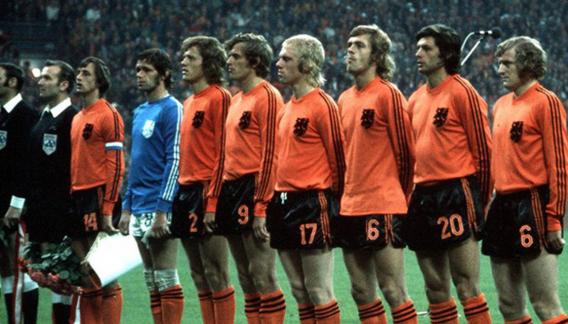
Cruyff – Adidas, Puma and the Shirt with Two Stripes
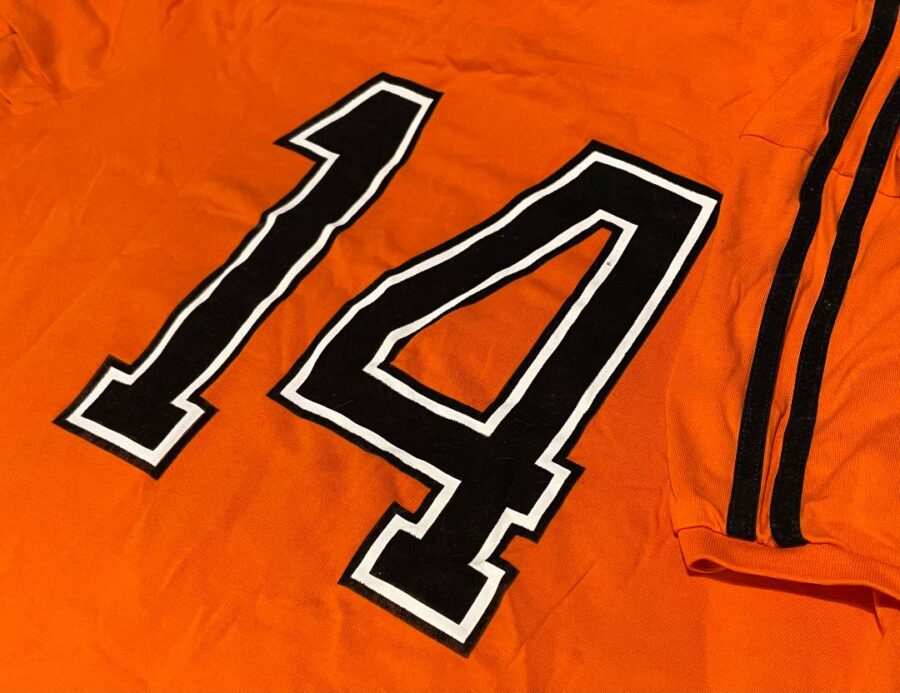
Cruyff. The name alone is iconic. Images of Johan in his orange Netherlands kit are era defining for Seventies international football. The number ‘14’ on the back, the contrast of the bright orange shirt against the white or black shorts. On the sleeves, the famous Adidas stripes. Only, the trademark three-stripes were different on the number fourteen shirt. There was a stripe missing.
Household name
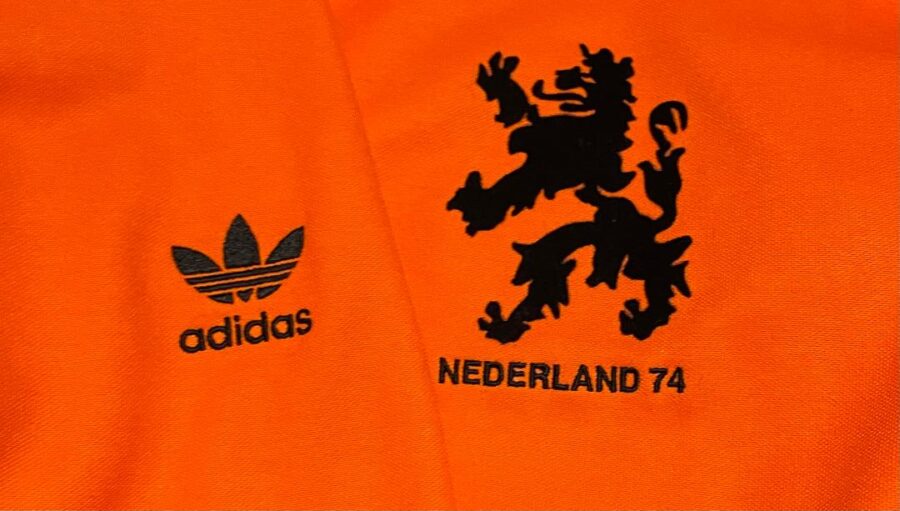
Even for those too young to have seen him play, Johan Cruyff is a house-hold name. His influence on modern football is as strong today as it was in his 1970s heyday. Pep Guardiola cites the Dutch legend as the inspiration behind his managerial ethos. As a player, his name belongs on the list of all-time greats. In 1974 he captained the Netherlands to the World Cup Final. It was not just the Cruyff name that was iconic, the ‘14’ on the back of the orange shirts in that tournament was so aesthetically pleasing that it is still sold by the lorry load today. The reason the captain had a stripe missing from his sleeves showed the gravitas of the player. To understand how big a deal it was, you need to know a bit about the history of one of the world’s most famous sporting brands.
Brothers at war
German brothers Rudolf (Rudi) and Adolf (Adi) Dassler were in the business of manufacturing running shoes in the 1930s. The duo’s relationship, both as siblings and business partners, was already strained during the Second World War. Rudi had refused to employ his sister’s two sons into the family business. Adi was unhappy with the decision and this was exacerbated when the nephews were drafted to fight in the war, from which they never returned.
Both Rudi and Adi survived the war but their relationship took a decisive turn for the worse afterwards. The siblings went onto testify against each other in Allied held post-war trials, each accusing the other of Nazi involvement. It was the point of no return for their relationship, and that of their company.
Puma and Adidas
They split the company assets and each went on to form new organisations. Rudi was first as he founded the brand Puma. Adi followed as he used his own name to come up with Adidas (ADI DASsler). The sport shoe manufacturing brothers went into competition with each other in a long-running pursuit to be the number one brand in sport.
As the Dassler brothers grew older they passed the running of their companies on to their children. The competition between the brands did not wane though as a dispute over Pele reignited the old feud. Both the boot makers had agreed not to provide the Brazilian legend with their boots as they feared his popularity would lead to an expensive bidding war. Puma finally broke this agreement as Pele wore their footwear whilst winning the 1970 World Cup. If Pele, the biggest name in football, could not lead to an agreement between the companies then it seemed that nobody could.
World Cup ’74
In the lead up to the 1974 World Cup in Germany, the Dutch FA signed a deal with Adidas to be their kit provider for the tournament. It would be the first time that the iconic three-stripes would appear on the sleeves of a Netherlands shirt.
A fly in the ointment of that deal was that those in charge of the deal from the Netherlands never considered they would need to confer with their players before agreeing to the lucrative contract. That oversight put their captain Johan Cruyff in an awkward position.
Years earlier Cruyff had signed an exclusive deal with Puma, including him wearing the famous ‘Puma King’ boots. The captain refused to wear the new Adidas-branded Dutch kit citing a conflict of interest with his Puma deal.
Rebel brand
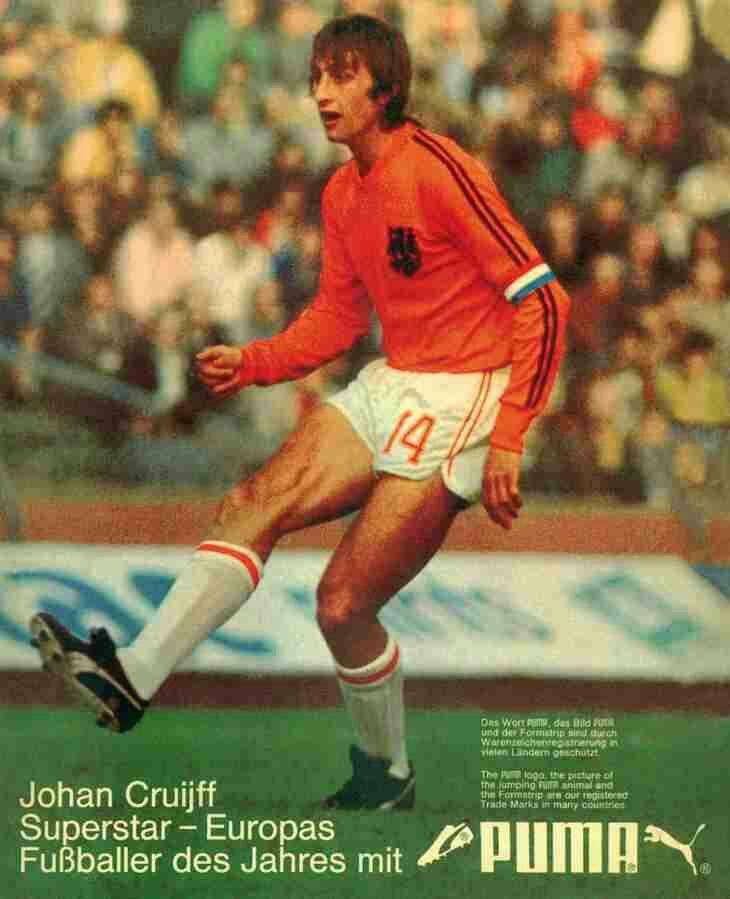
If it were almost any other player this refusal would have ended one of two ways. The player wearing the kit, of the player no longer being selected for the national team. But this was Cruyff. An agreement was met whereby one the three famous Adidas stripes would be removed from the number 14 shirt, and the number 14 shirt only. There was no Adidas logo on the chest of the shirt as is the norm these days so removal of one of the stripes made the shirt ‘neutral.’
The story gave Puma a huge victory over their long-time rivals as the captain of the World Cup finalists appeared in the game wearing a different shirt to his team-mates. Stories were told that Cruyff had ripped the stripe off himself in an act of rebellion. Puma latched on to that particular narrative in advertising campaigns citing the ‘rebel player wearing the rebel brand.’
Instantly recognisable
A three-time European Footballer of the Year, Cruyff’s Netherlands side of 1974 are considered by many to be the best team never to win the World Cup. The player himself retired before the 1978 edition of the tournament in which his nation was again the beaten finalists.
The 1974 Netherlands shirt is one of the most iconic in football history. Instantly recognisable and forever linked to the captain of the time. The fact there were only two stripes on Cruyff’s shirt may have passed many people by when looking at images and footage from the tournament. A subtle alteration in what was a decades long manufacturing rivalry.
Puma claimed victory with Cruyff’s two stripes. Adidas meanwhile celebrated as Germany beat the Dutch in the final and Franz Beckenbauer lifted the trophy with three stripes on his sleeves.