

James Richardson – Papers, Piazzas, Puns and Elvis Costello
This interview should really have been conducted in a sunny Italian piazza. We should have been sat at a table covered in copies of Gazzetta Dello Sport. Next to some coffee and a large ice-cream. As it was, James Richardson joined me on a Zoom call to discuss the glory days of Football Italia. We talked Serie A, Paul Gascoigne, The World’s Strongest Man, and everything in between.

Italia 90
My own love of Italian football began whilst watching the 1990 World Cup on television. It was a tournament that meant a lot to many football fans for all manner of reasons. It also proved to be an important time in James’ life.
“I was one of those people who 1990 really proved kind of a catalyst for my interest in the sport. At the same time as that World Cup, I started going out with a girl from Rome. I would travel over there frequently and I became an Italian football fan. At the time I was working at Sky they had the rights to Italian football so I had the dish that few people did at the time. I was following Serie A from 1990 onwards. Then in 1992 Gazza’s move caused them to make a program about it all.”
Gazza
Paul Gascoigne’s move from Tottenham Hotspur to Lazio was the catalyst for Channel 4 to obtain the rights to show Italian football in the UK. It is easy to forget now just how popular Gascoigne had become following the 1990 World Cup. A passing comment by the player whilst filming a documentary on his return from injury was enough to set the wheels in motion for what would become Football Italia.
“Gazza was a huge figure culturally at the time, as well as in sporting terms. There was a long period between him getting scouted by Lazio, essentially during the World Cup, and then finally making the move with the knee injury in between. I had seen so much interest in Gazza, in both countries. When I was in Rome, people would say, are you English, how do you think Gazza is going to do? People would ask in England the same as what they were saying in Italy. It was clear that his presence alone was something that people were massively interested in.”
Focal point
“Italian football was at the time, such a focal point of the game. It was just such a preeminent place to play football that I did think the Channel 4 coverage would be a success. I did not think I would be a success. That is understandable given that I wasn’t a presenter and didn’t come from a background of playing. I figured that would probably be a disaster because people watching football can be can be pretty territorial about it. They can be merciless if somebody is on screen who doesn’t know what they’re talking about. I think because it was a foreign league, I got the benefit of the doubt from people.
I was also completely sold on the fact that this was the best football. Sky had taken the new Premier League from ITV. It was clear that we were the only football on terrestrial television. So, I wasn’t too concerned about the league being a success here.
I think it was a perfect storm. There was a huge star that acted as a focal point of interest to launch it. Paul Gascoigne and in that first season, you also had David Platt at Juventus and Des Walker at Sampdoria. Later on, Paul Ince came out, and there were various other English players. Gazza was very much the thing that drove the program. It would not have happened had Gazza not gone to Italy. He had said to somebody making a documentary about his comeback from injury. ‘It’s a shame when I come back to play nobody will be able to watch my games because I’ll be in Italy.’ They thought, oh, what if?”
Gazzetta
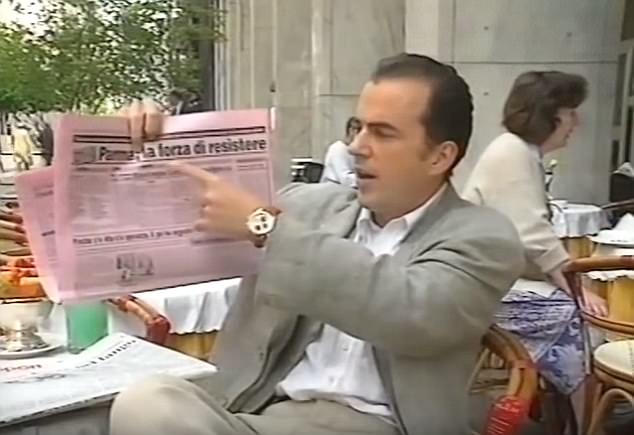
The Channel 4 coverage of Serie A saw them covering a live match every Sunday afternoon. In addition to the live match, there was a Saturday morning magazine show. It would round-up the action of the previous weekend. The round up show, Gazzetta Football Italia, gained something of a cult following itself. Its popularity was in no small part down to James’ presenting style.
“Most of my working week was taken up with getting the Saturday morning show together. There would be a day of filming things. A couple of days trying to arrange an interview relevant to whatever game we were covering that Sunday. I would also need to fly to whatever city was hosting the game, which wasn’t always straightforward.
The Sunday was almost easy because that was arranged by somebody else. You knew the game we were doing and we were told where we had to be. When it is live, once it’s done, it’s done, and you couldn’t really prepare too much. We obviously did our research, but the game happens and you react to it. So, I very much saw the Saturday morning show as my main focus.”
Paper round-up
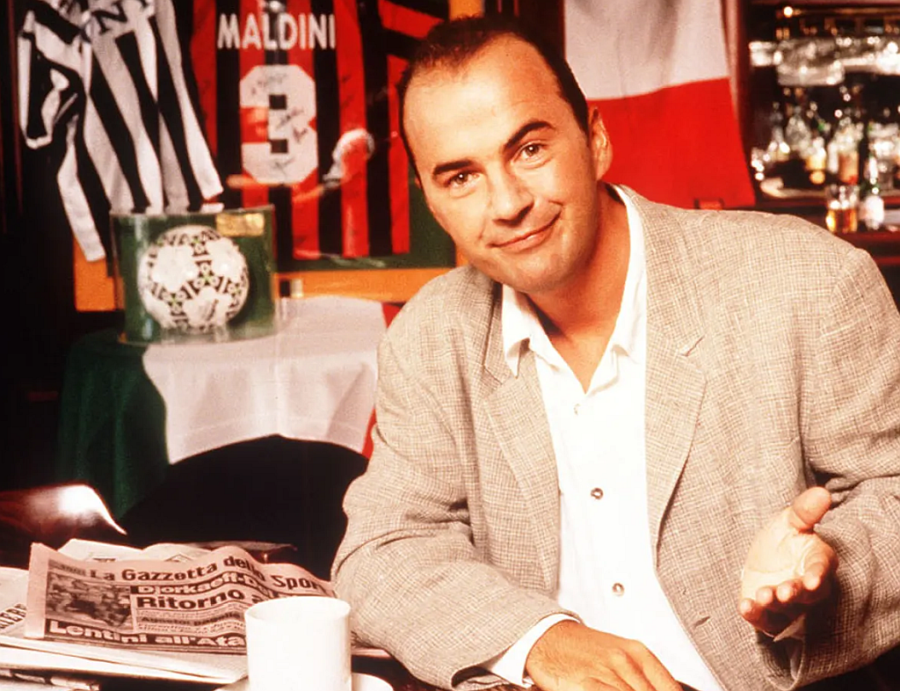
“I was kind of surprised that I was allowed to keep doing the show beyond the first couple of months. I genuinely thought, I am not going to make it beyond Christmas. My thoughts were that they would say I was an experiment that had not worked. But once the show kind of got going, I realized that, I could do this. I could translate the headlines and I could go and do an interview with somebody. There were bits that I thought I could make more my own. The paper round-up and doing funny openings with players and stuff like that.
I really enjoyed that and began to see that we could make the show successful. It was a show that had those things. But it also gave you concentrated bursts of great football and great goals which was a bit of a surefire winner. The games on Sunday could be nice to watch in your post Sunday roast stupor. But like all football, they could be a bit hit and miss. Given that this was essentially a foreign league, people did not have the same emotional ties and the same levels of love and hate for the teams involved. I can see that the highlights show was in many ways an easier sell.”
Fun to do
The magazine show was aired mid-morning. It was very different to shows like Football Focus which would follow it on Saturday lunchtimes. One of the things I always like about James’ style was that he always brought some humour to his presenting. Despite being very good at his job, he gave the impression that he never took himself too seriously and I wondered if that was intentional.
“I’m not sure if there was a lot of humour but I did try to include as much as possible. It was a Saturday morning show about football. Not even our football, so why would you want to take it too seriously. I think there’s always room to make something fun and the players liked it. I think the biggest reason for it was that I was not bringing any great football expertise. So, if I could contribute something that was different, that was me, whether it was pun or something like that, I was happy to do that. I could not offer any great insight about football so it was just fun to do.”
On my own in Italy
“Channel 4 gave us a huge amount of leeway to pretty much make the show we wanted. The production company gave me a certain amount of leeway, because I was essentially on my own in Italy. I would just send them back the tapes. The other reason it was different to most football shows is that it was it was quite a lot about the country. If I was that age again and we were going to make a Gazzetta, I think there would be a lot of different things that I would like to do. With hindsight, there were areas of the culture that we could have brought out but we never did.
The fact it was a show that was on the road in Italy. It was a lot about Italy, which was not something that was necessarily true of say Football Focus. I never used to watch any of those shows. So there was no way that my approach was going to be influenced by Tony Gubba or whoever else was presenting at the time. I was not like any of the other presenters. I was essentially some bloke who was a producer at Sky, who could speak Italian and not whatever kind of career path normal football presenters took.”
Self-deprecating
Richardson was self-deprecating throughout our chat and almost seemed to talk down his influence on the show. It is a show that is still remembered with much fondness now, over thirty years since it first hit our screens. I wondered if James had a theory as to why that was.
“I think it was very different to programs of its time. Now we have wall-to-wall coverage of all sorts of leagues from all over the world. Then we had this exotic Xanadu of football that was so close but so far away. You could get glimpses of it on a Saturday morning or a Sunday afternoon. These magnificent football Gods with their flowing locks and a guy sitting in a beautiful piazza with an ice-cream, translating what funny foreign headlines mean.
I don’t want to overthink it. But, I suspect that had I been sat there watching it, I would have felt sophisticated watching the show. People were getting access to a world that at the time, had not been on TV before. It was a very special moment in that league’s history too. Maradona had just left about a year before, but you had van Basten and Gullit there. You had Roberto Mancini, you had all the great Italian number 10s coming through.”
Emotional impact
“The other thing was that Italia 90 had such an emotional impact. It caused such a sea change in the way football was perceived. For people in England, with the semi-final against Germany and all that, it had a tremendous impact. This magnificent run to the semi-finals. Then almost perfectly cementing that team in everyone’s hearts by losing in the most heart-breaking fashion. Now our show came along and gave you almost like a spin-off show of Italia 90. It was the same stadiums, most of the same players. You had no less than three members of the England team that had been in Italia 90 playing in Serie A.
I think it was very, very different in its approach. It was quite unpretentious and I mean, I did not have anything to be pretentious about. I think principally it was the fact that it was Italy, great football and people were young so, yeah, nostalgia, you can’t beat it.”
Serie A stars
The show featured many interviews and over the years. There were not many Serie A stars who failed to feature at some point. Richardson often shared screentime with Pauls, Gascoigne and Ince. His ability to speak Italian also opened him up to interviews with players throughout the league.
“Gazza is extraordinary. He is an amazing entertainer, but I think it is because he is such a generous person with himself. He just likes to give his energy. If you can point a camera at him and give him something to do, he would do it. It is kind of touching how he likes to entertain people. Paul Ince was fantastic as well and we kind of became friends. I really liked Gazza and I think he liked me as well, but I think with Paul Ince there was more of a nice connection.
In terms of the players, it is quite hard for me to remember the specific interviews. Gianluca Vialli was always someone who stood out for me as an amazing interview. Even if you asked him a really boring question, he’d always think about it and come up with a genuinely fresh take. So, I really enjoyed talking to Vialli and he was a massive star, so it was a good feeling.”
Movie star status
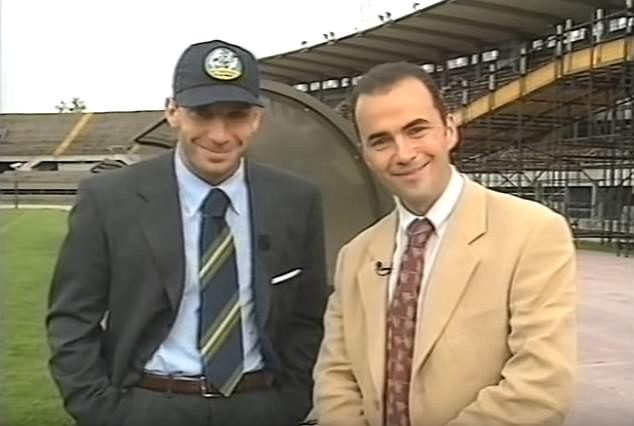
“These players were legendary and had a huge amount of pressure, attention, and fame in Italy. They had kind of movie star status. It surprised me how down to earth they were, how approachable and often humble they were. By and large the players were really, really sweet and you know, sometimes it could be difficult to arrange stuff. That was mainly the clubs, I think, rather than the players.
There were one or two who were a little bit funny or asked for money. A couple were a bit, kind of, not very pleasant, but by and large they were incredible. The one that for me was always ‘the interview’ was whenever we did Roberto Baggio, because there was something so other about him. Even within the context of Italian football.Hhe was a separate category in terms of talent, in terms of aura, and in terms of what he represented.”
English gentleman
The mention of Baggio thrilled me as he was the reason I started following Italian football all the way back in 1990. James’ comments about Vialli interested me too, as I always enjoyed hearing him talk about the game. I felt he came cross in a very English or British manner. I asked James if that was the case for him on his meetings with the late Sampdoria and Juventus legend.
“He was, I mean there is this kind of interesting emotional two-way street between England and Italy and the Italians. They were very, very intrigued and fascinated by aspects of English life. They slightly idolised what they perceived as aspects of the English gentleman character. There was this whole notion of Oxfordian behaviour and how sporting the British were. Equally, I think a lot of English people have a bit of a thing about Italy and are charmed by country.
A bunch of the big players wanted to come over here to come a play. It was not just for the money. I think in the 90s the money was not so much better here, maybe even less, I don’t know. Vialli and Gianfranco Zola leapt at the chance to come to Chelsea. Players like Paolo Di Canio were completely into this whole Britishness thing. Di Canio I remember, had this clothing store. Its whole styling was all about being like some kind of Scottish laird.”
Podcasts
The Italian football coverage eventually left terrestrial television and so too did James Richardson. He had a spell presenting Italian football elsewhere and even had a quiz show on Channel 4. It wasn’t until he returned with the Guardian Football Weekly podcast that he really regained his presenting prominence. In my mind at least.
“When the 2006 World Cup came round, I was writing for The Guardian at the time. We had a lunch and they said listen, we want to do something new for this World Cup. We want to do a podcast. In 2006 a podcast was a bit like ‘what’s that?’ I thought it was terrible idea. Anyway, that was huge because that is where the Guardian Football Weekly started. Then it became a twice weekly show. I was at The Guardian doing from that from 2006 to 2017.”
Totally Football Show
James now fronts the Totally Football Show podcast. He clearly is far more at ease with the podcast medium after his early pessimism.
“There is an informality and a feeling there is an in-joke between the audience and the people making the show. That we are we all sharing the joke. You are not making fun of the sport because that would be ridiculous and ultimately it would be really defeating. But you can make fun of lots of other things, including yourself. There is room to do that whilst taking football and what it means to people seriously. They are not exclusive things.
When I was writing for The Guardian, they started doing a website. I think at the time it was called Guardian Unlimited. It was around 2000, which was really early as back in those days it was a quite new idea. They immediately had a house style that was really kind of cheeky and just had its own language. It was kind of quite meta in the fact that it was self-referential. It was almost having a laugh at itself and it was constantly self-deprecating. I took that into the podcast and I was really influenced by what they were doing, like people like Barry Glendenning. So, I was really happy to do the podcast with them and bring in as much of that flavour as possible.”
European Football Show
When BT Sport, now TNT, put together a presenting line-up for new show featuring European football, James must have been something of an obvious choice. Budget cuts meant that the European Football Show never lasted for as long as it should have. For me, it was one of the best football shows of recent years. That was in no small part to the line-up, headed up by James.
“You used to have this environment where it would be a presenter, very serious. A couple of ex-pros who would say some stuff. It is more-or-less always the same and that is a massive disservice to the audience. It is more about filling airtime than it is informing viewers. I am really happy that because of podcasts relying on journalists, that it has opened up TV to journalists as well. I would doubt many people would pick up newspapers to read sports reports if all the sports reports were written by former pros. So why we would have exclusively former pros doing that job on television.”
New dimensions
“When you are dealing with foreign football, if you have a guy on who may have played in that country ten, twenty years ago with the best will in the world, it is very rare that they actually have something new or relevant to say. We did the European Football Show on BT Sport. We had a guy who covers Italy in James Horncastle, a guy who’s German and covers all things Germany in Raphael Honigstein and equally France with Julian Laurens.
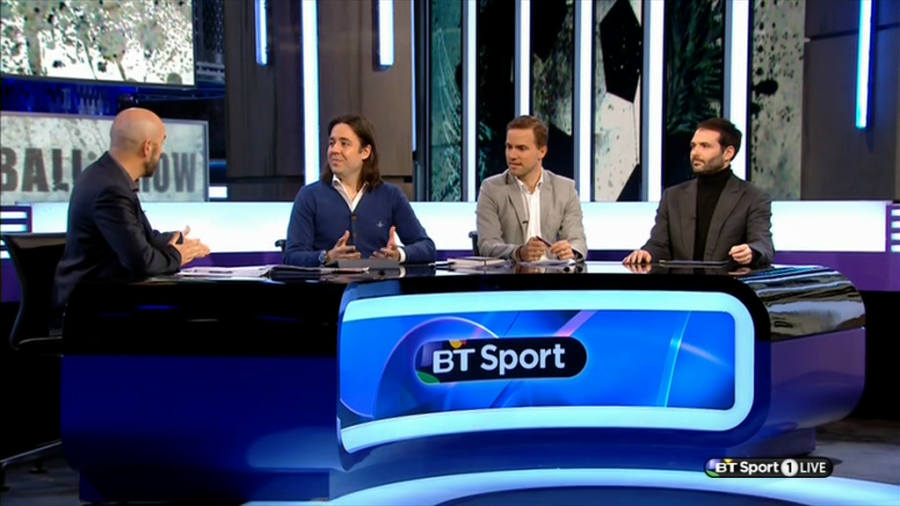
They can bring new dimensions to people’s understanding of what is happening. You know, it is not just an ‘organised and defensive’ Italian side turning up at Anfield. It is ‘Atalanta and this is what they do, and this is why it is special.’ You do not get that from somebody who happened to have played for say, Bologna twenty years before. I think that’s part of the podcasting revolution, the way that has changed. It has broken down the walls a little bit between audience and the broadcasters. Also to journalists to allow them to kind of, creep into the TV as well.”
World’s Strongest Man
I spoke to James at the tail end of the festive period. The previous day I had watched him presenting the World’s Strongest Man on television. It has become something of a staple on UK television at that time of year. I wondered how James came to present the coverage.
“They hit on that formula of showing it at this time of year. One of its selling points is that it is a slice of sunshine in late December. I got that job because the guy who was the producer at the time had worked with me at Premier League television. He told me that he had asked for me to replace the previous guy, a rugby player, who had gone off to do something else.
I think probably the fact that I am pretty short and it would play up quite nicely. In kind of ‘Gandalf meets the hobbits’ fashion. Me standing next to the immensity and size of the strongmen in question. I think the first time I did that was 2001 or something. It has been a while and it is so much fun. It is my favourite week of the year.”
Elvis Costello
Just time for one last question. Anyone who has watched James presenting or listened to his introductions on the Totally Football Show, will know about his puns. The topical intros on the podcast always have a few gems in amongst the pun heavy start to the show. I wanted to know if James wrote them himself. That led us back to a golden moment from Football Italia when Elvis Costello appeared on the show and Richardson managed to add one of his song titles to every half time score.
“I think one of the few things I can bring to a show is an ability to write a pun. I mean, they are an affectation, but yeah, I am quite good at puns so I try and get them in. Again, it goes back to this thing. If I was a brilliant football analyst, I might start a show with tactical analysis. I cannot do any of that and because I would like to be hired next week or next season, I try and make a pun about something and hopefully it is something topical and somebody will laugh.
There were the Elvis Costello half-time results you mentioned. That was easy because I was complete Costello maniac and that was such a treat for me. I spent a weekend with him on and off. We went to a game on the Saturday and had dinner and then the next day met up again in Genoa for live game. I knew every song and I brought my CDs for him to sign. That was fun times.”
You can listen to James and the Totally Football Show team three times a week throughout the season – https://open.spotify.com/show/30pUHuXuSQBSf7EfZQuEvS