

Iain Macintosh – Football Media With Muddy Knees
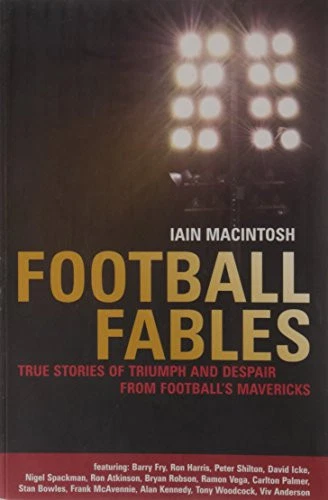
In the world of football media, Iain Macintosh is perhaps best described as an all-rounder. He is also a cricket fan, hence the rather heavy-handed ‘all-rounder’ reference. Macintosh lists football writer, presenter, podcaster and author on his resume. He also created, and later sold, his own podcast production company.
Iain started by telling me that it was his on-field ability, or lack thereof, that led him into the world of football media. Something which I very much related to.
Dodgy Tackle
“I wanted to be a football journalist since I realised that I was shit at football. So, basically about the age of seven. I was obsessed about football and I felt that the only possible way I could have any sort of life in it was to write about it. I was the weird kid who wrote match reports from the playground and passed them around to his friends. There wasn’t a school newspaper at my school so I just made a sports free-sheet called Dodgy Tackle.
I just always assumed that I would get straight into it. I was in the final five for a job at Match magazine in 2000, which would have been like a return to the mothership. Also, I was in the final five for a job at PlayStation 2 magazine, which also I would have been alright with. But I missed both of them and I got a job at a business news clippings website. By the time I left there about a year and a half later, the dotcom crash had been and gone and taken all the jobs with it. So, it was it wasn’t until after that I started writing and getting paid for writing about football.”
Traditional path
Writing on business is not a common route into football media. Iain did take the more traditional path of going to university, but even then, he did it in his own style.
“I had so much fun at the open day that I didn’t really pay attention to the course I was signing up for. It was a journalism studies course, which I am sure is a perfectly reasonable course, but it was way more theoretical than practical. Also, I didn’t help myself by oversleeping and just missing most of the sessions. I got offered lots of interviews and the only smart thing I did at university was applying for jobs very early on in my third year because I thought I’d beat the rush.”
I started working for The Independent newspaper on the syndication desk, where you have to sell The Independent newspaper stories to other newspapers. That was not particularly interesting, but I got talking to editors there and I had a clearer idea of who editors were and what they wanted. I left that job to do something very similar for a small football website called Icons.com, which mostly did online player diaries. It was a small, wonderful editorial team and one of the best places I’ve ever worked. We had a request come in for a ‘five great players’ or ‘five great rivalries’ kind of side bar from the Irish Examiner. There was no one there to write it due to illness and rather than turn it down, I asked the editor if could I write it.”
Who wrote this?
“I wrote it and sent it off to the Irish Examiner and they came back and said, ‘who wrote this, because it is completely different from the stuff we usually get.’ That led to more and more commissions from them for silly side bars and stuff. Then I wrote for a Singapore newspaper and they asked if we did anything other than footballer interviews. I said, kind of naughtily, ‘yeah we’ve got opinion columns as well.’ I then dashed off to write a particularly nasty opinion column about Ashley Cole and his swerving off the road at the mention of fifty-thousand pounds a week thing. After I sent that to them, on the spot they offered me a weekly column.”
A bit silly
Iain’s writing style clearly stood out as being different from was on offer from other writers. I wondered if it was a conscious decision on his part to try to stand out from the crowd.
“I think that particular article was just a bit silly. Sometimes you can write silly and it can go down like a bag of cold sick and sometimes you just write silly at the right time to the right person. Sometimes you can write something like that and the person at the other end just says no. Another person might see it as just the thing that they are looking for.
I think I have just always written in the same way. My biggest influence isn’t Brian Glanville or Hugh McIlvanney. My biggest influence is probably Terry Pratchett or Douglas Adams, so I’ve always liked writing silly and just a kind of a bit irreverent. I’m also not that clever. I’m not really in a position where I can write kind of high-minded stuff. I don’t think I could pull that off.”
Southend
Macintosh’s early days of watching live football came at Southend United. He was taken along to games there by his father who curiously was a West Ham fan rather than a Southend supporter.
“My dad was a West Ham fan, but he was also a police officer. Football for him in the 80s was stopping one group of skinheads from stabbing another group of skinheads. He wasn’t particularly keen to take his kid to a West Ham game in the 1980s, which I can understand. So, there were two options, Colchester or Southend. I went with Southend, honestly I think because I figured if the football was crap at least I’d have a day out at the seaside.
Like everyone else in the home counties in the 1980s, I kind of grew up supporting Liverpool because there was only one game a week on television and it was always Liverpool. But I think there was a creeping realisation that I had never been to Liverpool, probably couldn’t point it out on the map. And going to Southend was fun because there was so much swearing.”
Podcasting
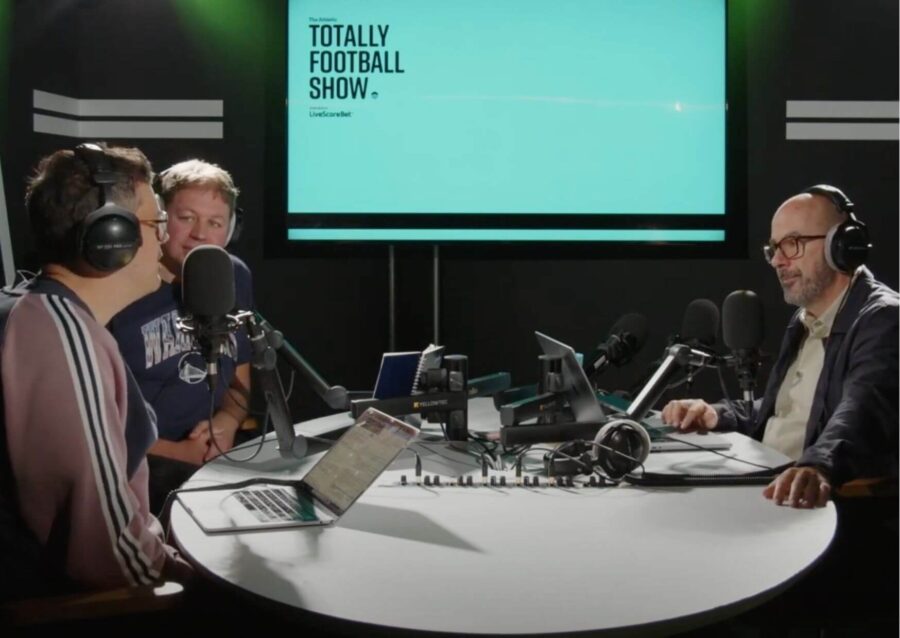
It is in the podcast world that perhaps Iain is best known. The Totally Football Show was, and still is, a gargantuan success. It wasn’t necessarily always that way in the podcast world for Macintosh in the early days of the medium. Before getting behind the mic himself, he put together a show with Barry Fry and Ian Holloway called, A Bit of Fry and Olly. Then he took to the airwaves himself with mixed results.
“The first one I was on was me and Adrian Clark from Icons.com and a writer called Ian Spragg. We had a podcast called Red, White and Blue. Red because Clark is an Arsenal fan, white because Spraggy is a Spurs fan and blue for Southend. We didn’t realise that was also the name of a far-right political US podcast. So, there were complications there, but it was that was quite a lot of fun.”
Dortmund against Shakhtar
“I think The Guardian Football Weekly podcast started in 2006. I didn’t go on it until I think 2013. I’m fairly sure it was Manchester United versus Real Madrid in the Champions League but on the same night it was Borussia Dortmund against Shakhtar Donetsk. I had put on Twitter that I would be the one person in the country watching Dortmund against Shakhtar and at exactly the same time Ben Green, the producer of Football Weekly, was scouring around looking for anyone who might be watching that game. He saw my post and got me on for a five-minute phone call. I didn’t screw it up too badly so he got me in the studio shortly afterwards.”
Knowledgeable football writers
The Guardian Football Weekly stood out in the football podcast market, in large part due to the contributors they would have on each week. They didn’t go down the well-trodden path of having a line-up of former players. Instead, a collection of knowledgeable football writers emerged with a different perspective on the game, with Macintosh amongst their number.
“At that time in 2006, most football discourse was the same group of people, you know, ‘the chaps’ in the national press. They did their thing and did it extremely well, but weren’t necessarily open to things like tactical discussions. Also perhaps have they didn’t have the wider knowledge of European football. Sid Lowe springs to mind as being the standout. You could listen to that show just for Sid Lowe because of the stuff that he knew, even before you discovered all the other people.
I think it was a really interesting time because so many people rose up who had this specialist knowledge that I don’t think the mainstream media would have been particularly interested in. You had Wilson and Coxy with tactics. Raf Honigstein with German football, James Horncastle with Italian and Jules Lauren with French. It was a real pluralisation of voices and it was a really interesting time. I think the reason Guardian Football Weekly stood out was that it was the only place where you could have these more interesting opinions. Now there is loads of places and loads of podcasts.”

Something new
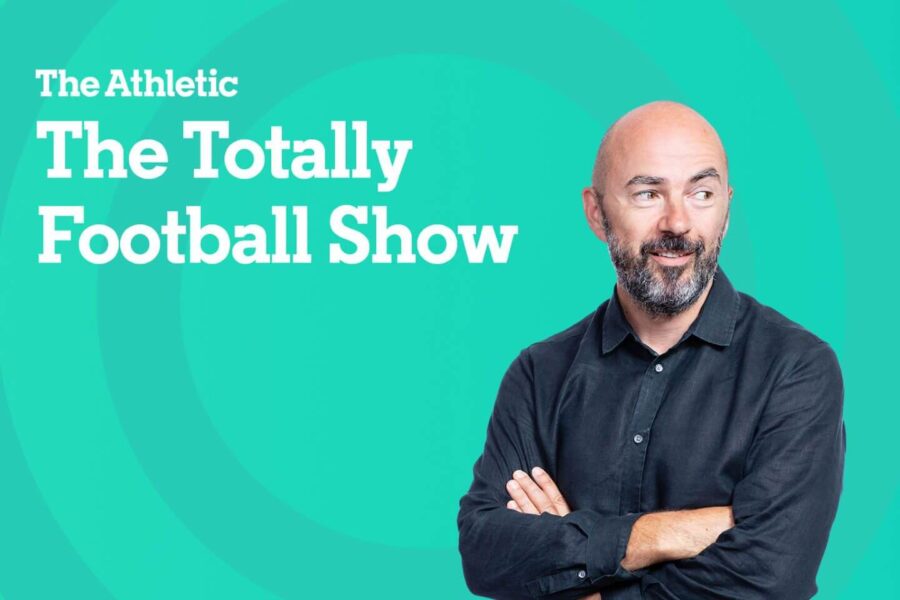
With the Guardian Football Weekly doing well, Iain and a few others decided they wanted to breakaway from the show to set up something new. That led to the formation of Muddy Knees Media and the birth of the Totally Football Show, hosted by James Richardson. Richardson left his role as host of Guardian Football Weekly and his inclusion was vital to the success of the new venture, according to Iain.
“I say this to people who congratulate me on my timing. It was completely accidental. We just started when we started, but that just happened to be just as podcasts were soaring. If we had gone in 2016, I don’t think the advertising market would have been developed enough to support us. And if we had gone in 2018, I think it would have been too late for us to stand out. The run up to the World Cup of 2018 was where podcasts really started kicking off. As memory serves me, 17% of people were listening to pods at that time and it went up very, very quickly to about 22 or 23%.
Things started to roar then and we had enough of an audience that we could quickly break off and do the Totally Football League Show and did Totally Golazzo and the Scottish show. We had our deals for all of those, which were all profitable. It wasn’t about scraping back some coin. We built a business on it and I don’t know if you could have done that a few years before without the existing superstructure of a wider business.”
James Richardson
“James was absolutely crucial. Not just to have on-board as a presenter, but as a significant stakeholder in the company. I’ve never known the man to do a bad show. I worked with him for years and he could come in sort of having a bad time of it elsewhere but still be brilliant. He has got the quickest wit of anyone I’ve worked in the media. Also, he is very modest. He sometimes refers to himself as not really knowing anything about football. I’m like, ‘James, you’ve been working in football for about 30-odd years, I think you’re an expert now.’
Big businesses were coming
The success of the Totally Football Show and the other podcasts in the Muddy Knees Media collection were such that The Atlantic brought the company under their umbrella in 2020. It was a move that Iain sensed might be in the offing during a trip to America a year or so earlier.
“I realised in about 2018 or 2019 when I was in LA. They had ads for podcasts on billboards and big businesses were coming in and big stars. It was way ahead of the curve compared to us here in Britain, but that was the direction it was going to go. The big money was going to arrive in podcasting. It was no longer going to be a cottage industry.
Muddy Knees Media was quickly turning over seven figures a year and making a profit. We were still doing really, really well, but we were very small. So, we had two choices. One, we’d take investment and sort of fire it up and try and go big. Or two, if a decent offer came in, then we’d cash in our chips. An extremely decent offer came from The Athletic that would be life changing money for everybody.”
Moving on
Iain recent left The Athletic, giving him the opportunity to take a break and survey what his next move may be. That may include authoring another book to add to his collection.
“I left The Athletic at the end of February and it was a very amicable separation. There is no hurry for me to bounce back into anything. The cricket season has just started, so I’ve been enjoying that, the break and just taking the opportunity to talk to loads of people.
God knows if it will ever even be released or finished, but I am working on a silly book as well. I’ve written nine books and everyone has been while I’ve had a proper job. I’ve always thought God, I could do this so much easier if I didn’t have anything else to do. I’m doing this one for myself. It’s not a sports book, it’s a fantasy novel. I’m doing it to prove a point to myself more than anything else. If it gets signed up, that would be wonderful. If not, I will never reach old age wishing I’d just taken the time out to write it. It is one off the Bucket-list.”
You can follow Iain on Bluesky – https://bsky.app/profile/iainmacintosh.bsky.social