
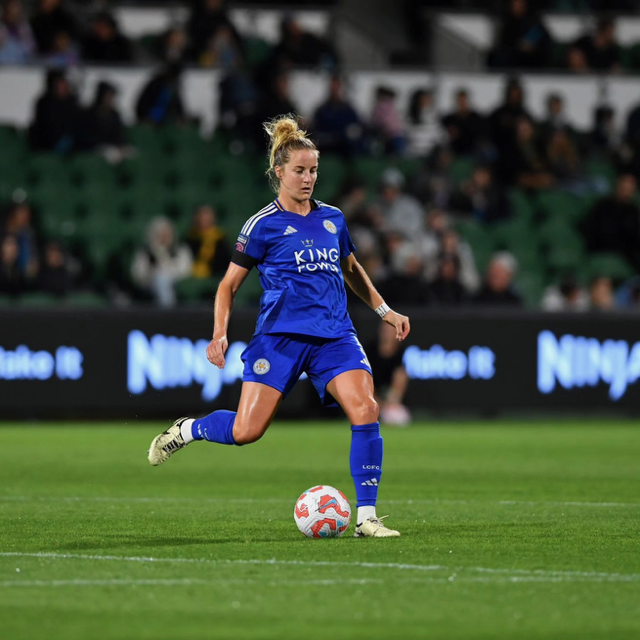
Sophie Howard – From Germany to Scotland
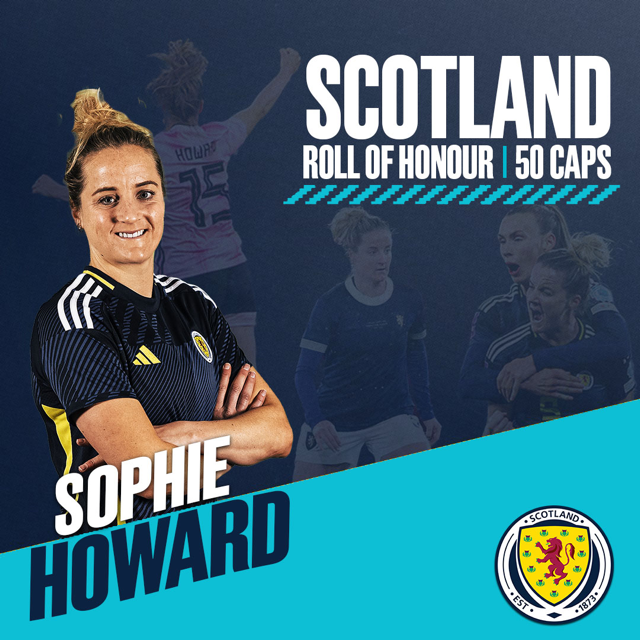
Sophie Howard broke through the 50-cap milestone this year. The Scotland and Leicester City defender’s journey to being a regular for her country hasn’t been a conventional one. I caught up with the former Hoffenheim and Reading player to discuss domestic and international football and what’s been keeping her busy away from the pitch.
Similar beginnings
I’ve interviewed several female footballers, and they regularly have similar beginnings in the game. Playing with a sibling in the garden then with boys at school, the option of an all-girls team not one that was available to them. Sophie’s career started in that familiar fashion, albeit in different surrounding to most Scottish players.
“I was five years old and idolised my older brother and he played football. That’s the sole reason that I started playing. When I was young, football wasn’t a career that young girls could aspire to. The older I got the more I wanted to give it a shot, whatever ‘it’ was. I feel like I followed a passion and just wanted to push and see how far it would go. It wasn’t a career that I aspired to as it wasn’t a career that was available to young girls.
I was born in Germany; my dad is English and my mum is Scottish. They moved to Germany before my siblings and I were born. When I started there were no girls football teams. I played for one of my local boy’s clubs until I was fifteen. Then I had to move on as I couldn’t play in the boy’s team above that age. I moved from there straight to women’s senior football. Playing those years with and against boys defined me as a player. I cherish those years playing with them. When I moved to Hoffenheim at fifteen they were just starting to move towards what would become professional women’s football. I stayed in Germany until I was 18 before moving to the United States for three years”.
German national team
The American college system has been a popular route into football for young women over the years. Howard spent her time Stateside in Colorado before returning to the country of her birth. It was from there that her journey to a Scotland call-up continued via the German international set up.
“I played college soccer in America before moving back to Germany as that is where my family is based. Then six years ago I moved over to play in England. When I got the call up to play under-twenty with Germany it was a very proud moment. I discussed it with my family quite a bit but as soon as I walked in the door at Scotland, I knew that was where I was meant to be.
The time in the youth sides with Germany educated me a lot. I never really felt at home within the German set up at national team level. Now I feel massively at home in comparison. It came about through Lisa Evans who was playing in Germany at the time, and we had a mutual friend. She had found out that my mum was Scottish and that I could play for Scotland. I guess she passed that on to Anna Signeul, who was the national team coach at the time.”
Close-knit group
The Scotland national squad appears, from the outside looking in, like quite a close-knit group. That feeling of closeness is clearly one which is important to Howard. She gets the same feeling from country and club colleagues now, which isn’t always the case.
“I think what you can see from the outside is what I feel on the inside. It really felt that it was group that cared for one another and would do anything for each other on and off the pitch. I got an immediate sense of belonging at Scotland and I hadn’t necessarily felt that in football before that. I’m someone that is quite loyal to clubs, so I played with Hoffenheim for six years and I’m now going into my fifth season with Leicester.
I don’t like moving unless I can help it and that is why I went back to Hoffenheim after college. The people that were there meant a lot to me as friends more than teammates and I found it difficult to leave that. I think when I moved to Reading, I didn’t feel that belonging and it was very difficult for me. I think when you are in a team environment you have the good of the team and wanting it to do well in common. That can be a bit superficial at times. What I found at Scotland is unique in its closeness and everyone caring about how each other are getting on life and not just football.”
Feeling of belonging
The feeling of belonging in her club career is what has led to the 31-year-old enjoying her time at current side Leicester City. She is happy on and off the pitch but also shares the club’s views on where they want to take their women’s side.
“First and foremost, I feel at home here and I’ve built a life that I’m happy with on and off the pitch. I can identify myself with the club and the direction that they are moving in. When you look behind results and what happens on the pitch, the club have a very clear vision for the future of the women’s team. I want to be a part of that journey. I believe the club belongs high up in the English game and I hope to help get them there.
It’s probably down to my age and experience in seeing a clear plan and project. When you are within the environment and seeing it every day you can really get a feel for it that you can’t from the outside looking in. I’m not a believer that the grass is always greener elsewhere. I know what I’ve got here and what I’ve built. I’ve put too much work into building that just to jump ship and move on. Next season will be my fifth and I feel that I’ve built a real connection with the community. It’s really important to me to build that relationship and it’s an important one to keep building women’s football.”
Patiently waiting
Howard has had to be patient as she worked towards a starting spot for her country. She has now made herself one of the first names on the manager’s team sheet. As well as the hard work and patience, the centre-half believes that her spell abroad also helped her to get to where she wanted to be.
“I would advise every player to move away from their comfort zone in terms of their surroundings. That really helped me grow as a person and not just as a player. I moved away from home when I was 15, so I had to grow up very quickly. In terms of moving abroad, fortunately we’ve seen real progress in women’s football in Scotland. Players playing in Scotland now can compete and the development in the league has meant players don’t need to move abroad to get that experience. I think you’ll see more home-based players in the Scotland squad as the league there evolves.
I’ve had to wait and work for this for a long time. It was really, really hard at times and my patience was tested. My patience is probably my weakness too. I never take Scotland for granted and I never expect it but I’m glad that my performances have got me into the stating eleven. It feels like it’s taken a long time and a lot of work to get there. I wasn’t on the radar when I was younger, and I got my first call-up a lot later than most players. I trusted that if I just kept my head down and kept working hard then I could move from the fringes and as a squad player and into the team.”
Passion for football
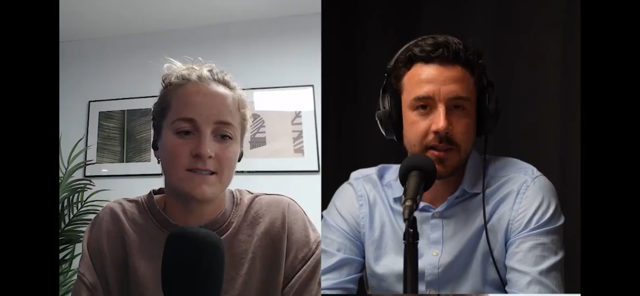
Howard’s passion for football is evident when talking to her about the game. She’s recently directed that passion into the form of a podcast. ‘The Bold Tackle’ is presented Sophie along with her brother Oliver. The two discuss the women’s football industry and try to tackle some of the bold subjects associated with it.
“My brother and I had discussed doing it for some time. There are four of us brothers and sisters and the only time in the day that we all got together when we were younger was at dinner with our parents. That’s when we would chat about our day and as we grew up, we kept that going over the phone. At some point we realised that we enjoyed our long discussions but there might be value in sharing them. Especially when discussing the things that are more difficult to talk about.
Football isn’t all glory and certainly isn’t all rosy. I think it’s important to share that side of the game but it can get difficult when we discuss things that are more controversial. I’m an active player so I can’t always fully speak my mind as I represent the club. I have to be mindful of that. My brother was the one that introduced me to the media side. I really enjoy it and realise the importance to the game.”
Growing the game
Bringing some of these difficult topics from around the women’s game to the public is significant to the growth of the game. Growing the game is something that always comes across as important when talking with female players who almost see it as their responsibility to do. A feeling that is borne out of years of having to push the game themselves without the help of clubs and media.
“I don’t think we share the bad parts of the game enough. It’s the way people know what is going on and if we don’t talk about it then people will think things are okay when they aren’t. Sometimes I feel like we’ve got two jobs, one as a player and the other to grow the game. Even in down times at the end of the season when I’m spending time with family, I’ll be doing interviews and things just to keep building he game.
I love doing it as I feel a small part of a bigger picture. We’re all trying to grow it together even if it does feel like two jobs at times. I can see it at our club that more and more people are getting invested in the team rather than it just being a box ticked. Until we get to a point where clubs realise the value in having people off the pitch to promote the game then the players will have no choice but to keep being the ones to push it.
You hear about the fight for level pay but it’s more about equal opportunities than equal money. It’s not about getting the same wages but being given the access to the same means to improve as the male players. I believe we are expected to perform at a level which is far higher than the facilities and support we are given off the field in comparison to male players.”
Moving at pace
The women’s game has made great strides in recent years. Howard acknowledges that whilst voicing a note of concern going forward.
“My generation had to fight for everything, literally even just to get on a pitch. Fortunately, we’ve moved on from that now. I’m grateful for the development of the game and hope it keeps moving at pace. I hope it doesn’t lose its identity as those that started playing before me had to fight to play and it was only about the game. Now the professionalism and commercialism are growing. I worry we just follow the men’s game rather than retain our own identity. We can use men’s football to learn from their mistakes, but we can’t just replicate the men’s game. We need women’s football to maintain its own identity.”
You can listen to Sophie’s podcast ‘The Bold Tackle’ here – https://open.spotify.com/show/3hnFF2EUENkbvLRJPaugeY